We naturally place immense weight on the beginning of a meal. The opening sequence of a tasting menu is designed to command immediate attention. We analyze the first bite of an amuse-bouche, judging the kitchen’s intent and technical precision right away. However, I argue that the opening act is merely a foundation. The true measure of a dining establishment lies in its conclusion. The final moments of a meal dictate exactly how the entire experience will be stored in our memory.
Consider the structural role of the dessert course. It is rarely a mere indulgence. In a highly disciplined kitchen, the transition from savory to sweet requires a calculated shift in perspective. A chef must cleanse the palate of rich, complex proteins and introduce a completely new spectrum of acidity and temperature. I look for deliberate restraint here. A brilliant dessert does not overwhelm the senses with excessive sugar. Instead, it offers clarity. It provides a definitive, focused resolution to the narrative that the kitchen has constructed over the past two hours. When executed correctly, this final plate anchors the entire menu.
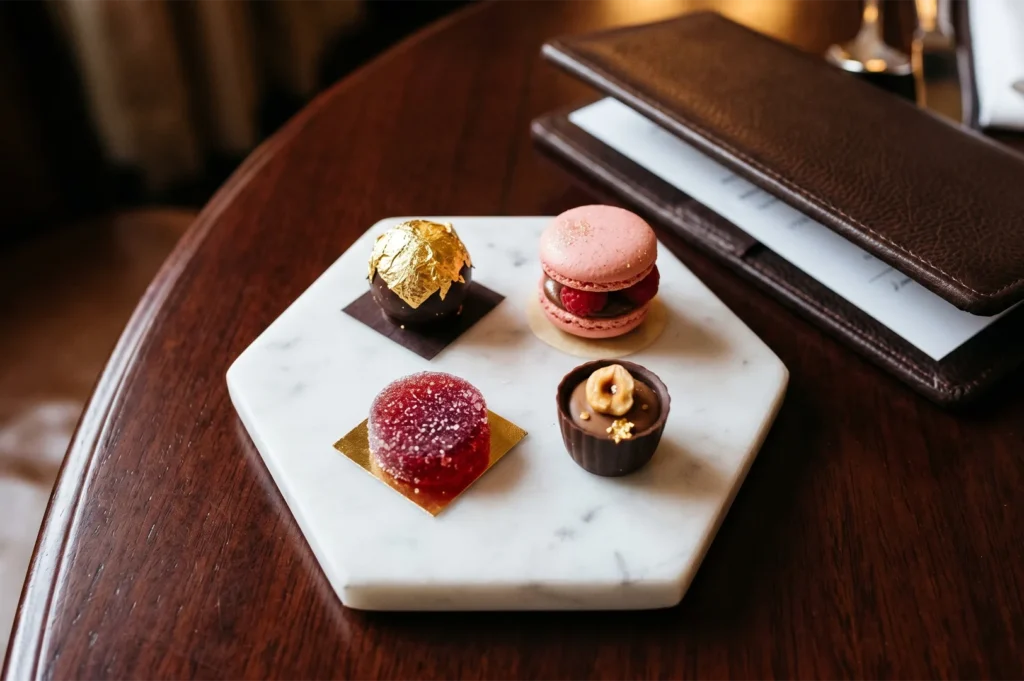
The conclusion of the meal extends far beyond the food itself. As the last plates are cleared, the mechanics of hospitality face their greatest test. The arrival of the check introduces an inherent friction, briefly breaking the illusion of the dining room by reminding us of the underlying transaction. Elite restaurants manage this transition with absolute discretion. The bill is presented seamlessly, often accompanied by a final, unprompted gesture like a selection of mignardises. These small, precise bites serve as a bridge. They soften the abruptness of the departure, allowing the guest to linger in the environment for just a few more moments without feeling rushed.
Then comes the physical departure. The process of leaving the table, retrieving a coat, and walking out the door is the final choreographed sequence of the night. I observe exactly how a front-of-house team handles this exit. A distracted farewell betrays a lack of institutional discipline. Conversely, a quiet, intentional goodbye from the maitre d’ signals a complete commitment to the guest’s experience from start to finish. This final interaction is what we actually carry out onto the street. It is the lasting echo of the evening. We might forget the exact plating of the third course, but we rarely forget how we felt when we walked out the door. The ending is the only thing we truly get to keep.
“The prologue captures the attention, but the epilogue defines the legacy.”
If you seek a deeper understanding of culinary architecture and the deliberate mechanics of elite hospitality, I invite you to explore further reviews and insights by clicking here.