The Quiet Luxury of Chinese Tea: Inside Singapore’s Most Exclusive Tea Sanctuary
There is a kind of quiet that is difficult to access in modern Singapore, where diaries stay packed and most leisure is engineered for speed. Within that context, Chinese tea culture has resurfaced as a form of luxury defined by restraint: fewer distractions, slower pacing, and a clear shift from consumption to appreciation. The act of tea drinking is not presented as an aesthetic trend. It is treated as a disciplined practice: one that rewards time, attention, and a willingness to stop.
For Luxury Dining Singapore, this is relevant because private dining has expanded beyond dinner tables. Increasingly, private hospitality is being rebuilt around quieter formats: host-led tastings, limited seats, and experiences where quality is expressed through control. Within Singapore’s broader shift toward experience-led luxury where hospitality, pacing, and format matter as much as cuisine, this sits alongside the wider evolution documented in The Evolution of Fine Dining in Singapore: How Dining Experiences Have Changed.
This is where Tea Room by Ki-Setsu belongs within the Private Dining category: a tea room Singapore concept positioned around sourcing integrity, curated service, and a setting designed to let the tea speak without persuasion.
Tea Leaves and the Yunnan Origin: Where Luxury Tea Begins
The language of luxury in Chinese tea begins with origin. The most frequently cited examples of depth and longevity come from Yunnan, China, where old-tree material from mountains such as Bulang and Yiwu is often referenced for its complexity. Tea Room by Ki-Setsu frames part of its selection through this Yunnan connection, using provenance to define what qualifies as serious tea rather than relying on broad novelty.
This approach matters because the difference between a competent drink and a meaningful one often sits upstream, in agriculture and processing. High-grade tea leaves are shaped by where they are grown, when they are picked (spring and fall harvests can present differently), and how the leaf is handled; withered, rolled, and dried. The variables are small, but the outcomes are not. A change in oxidation, a shift in drying technique, or a slight difference in storage can alter both taste and longevity.
Within this framework, aged teas such as pu’er are not positioned as lifestyle products. They are treated more like a living category: capable of evolving over years, much as wine develops under controlled conditions. The comparison is helpful, but only to a point: tea remains a non-alcoholic beverage, and its complexity is expressed through infusion management rather than fermentation alone. What remains consistent is the principle: rarity is not created by marketing; it is created by limited, traceable supply.
For diners exploring Chinese tea in Singapore, the value of this provenance-led approach is clarity. It reduces the confusion created by vast varieties and directs attention toward quality markers that can actually be explained.
Tea Room by Ki-Setsu: A Private Dining Model Built Around Chinese Tea
Tea Room by Ki-Setsu does not operate like a casual tea house. The structure is closer to private dining: reservation-led sessions, controlled pacing, and a host responsible for both selection and service. The decision to require guests to book ahead signals intent. It allows the experience to be designed rather than improvised.
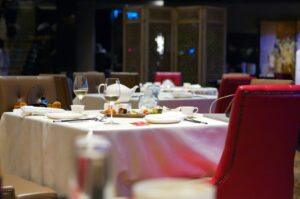
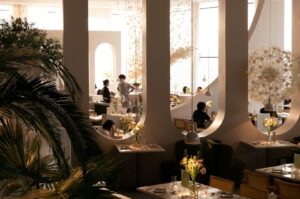
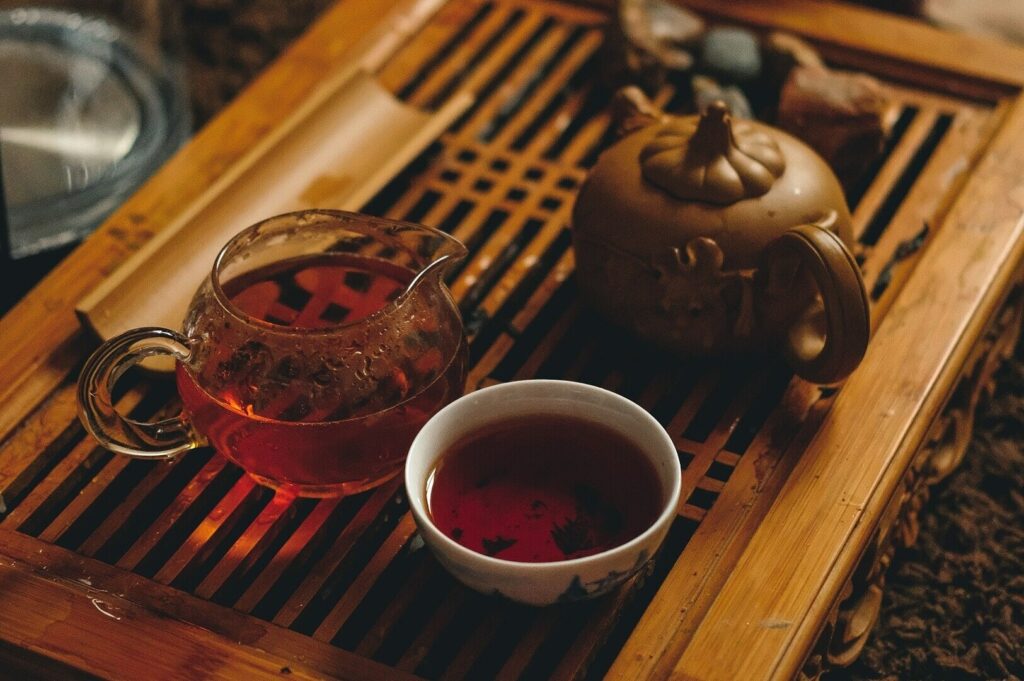
The room itself reflects that discipline. Wooden tables, a restrained palette, and a deliberately quiet layout function as more than aesthetics. They reduce visual noise and keep attention on the work happening at the table: water temperature, infusion timing, and the sequence of cups. This is not a space built for quick drop-ins or distracted scrolling. It is built for a planned visit and for guests who understand that a quiet hour can be absolutely worth more than another crowded reservation.
In practical terms, the session begins with preferences, not a hard sell. Guests typically indicate whether they prefer lighter or deeper teas, floral or more roasted profiles, and whether they want a gentler introduction or a more structured tasting. This creates immediate direction without requiring prior expertise. The host’s role is to explain the reasoning behind each choice and to translate the mechanics (infusion strength, water temperature, steeping intervals) into something intelligible.
This is what makes the experience read as journalistic rather than performative: the focus remains on how the system is built, not on personality. The guest is not encouraged to chase superlatives. The format is designed to improve the guest’s ability to recognise difference, cup by cup.
Oolong Tea, Pu’er, and the Spectrum of Taste
A credible tea programme is defined not by novelty, but by range and restraint. Tea Room by Ki-Setsu positions its sessions around classic pillars of chinese tea: green teas, white teas, oolong styles, and aged pu’er. The purpose is not to present everything at once, but to guide guests through contrasting categories without overwhelming them with excessive choices.
The tasting logic remains consistent across categories: tea is not a single pour. It is a sequence. Each infusion is effectively a new interpretation of the leaf: less about “one perfect brew” and more about how a tea opens over time. The experience becomes less about simply drinking tea and more about observing it: one measured sip, then another, tracking the shift in aromatics and finish.
For guests accustomed to pairing frameworks, the comparison to a tasting flight is useful. Tea is a drink, but it also functions as a lesson in control: temperature, timing, and restraint. In a setting that values discretion, that approach is often highly recommended for private occasions where conversation matters more than spectacle.
Teaware as a Luxury Layer: Craft, Heat, and Form
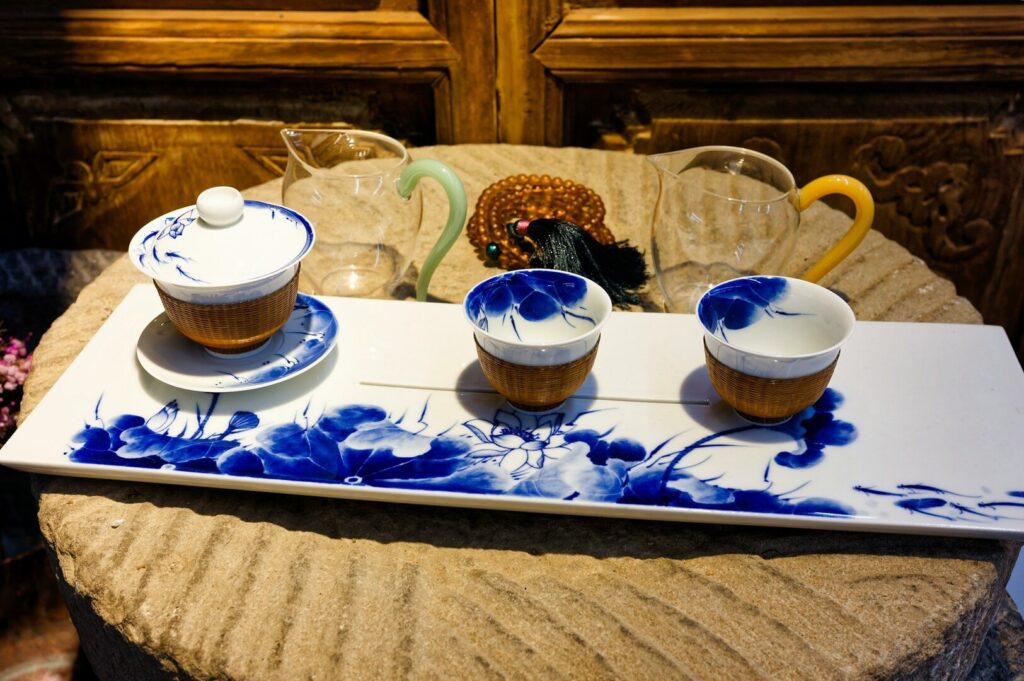
In private dining, the vessel matters: glassware, plateware, cutlery. In tea, it matters even more. Tea cups and other teawares are not only visual beauty but also function: heat retention, pour control, and how aromas gather and dissipate. A well-chosen teapot can stabilize extraction and serve the tea at an optimal temperature. The material and thickness of teacups can alter perception, enhancing the experience of the tea’s delicate flavors. The shape of the rim and the weight of the vessel influence how tea is received, offering different options to suit individual preferences.
This is where the room’s vocabulary of art becomes relevant. References to kiln craft and handmade pieces suggest an approach that treats teaware as authored objects: exquisite not because they are ornate, but because they are intentional. For experienced drinkers, the distinction is familiar: utensils are part of the method, not accessories.
Chinese tea culture, which originated centuries ago, has always celebrated the harmony between the tea and the vessel it is enjoyed from, making the choice of teaware a vital part of the ritual.
From a Tea House to a Tea Sanctuary
Singapore has long supported tea culture, from casual neighbourhood stalls to heritage-aligned teahouses. In the past, many traditional tea spaces functioned as social rooms: places to talk, play, and share small bites. Some contemporary interpretations continue that model, leaning into broader menus and a more casual rhythm. Others move toward retail and collection, where the emphasis is on education, acquisition, and a deeper catalogue of products.
Within that landscape, names such as Yixing Xuan Teahouse and SILK Tea Bar are often recognised by tea enthusiasts as part of the local ecosystem for Chinese tea in Singapore, particularly for those who prefer to explore a wide range of teas and purchase for home brewing. Tea Room by Ki-Setsu differs in emphasis. It narrows the frame: fewer variables, higher attention, and a session format designed to hold the guest in place rather than push them through a shopping experience.
That distinction mirrors trends seen in other global cities. In London and New York, a growing segment of luxury hospitality has shifted toward low-seat, appointment-led formats; private tastings that replace noise with structure.
The Singapore Context: A New Chapter in Tea Appreciation
The emergence of a private tea space marks a new chapter in the story of Chinese tea in Singapore. It aligns perfectly with the city’s evolving luxury landscape, where discerning individuals are increasingly seeking experiences defined by authenticity, craftsmanship, and privacy. The philosophy behind this reservation-only tea room mirrors that of the finest private dining establishments. It is about curation over volume, quality over quantity, and providing a bespoke experience that cannot be replicated.
Singapore’s multicultural heritage and its position as a global crossroads create the perfect environment for this refined appreciation of Chinese tea culture to flourish. The city is home to a sophisticated audience that is both globally aware and deeply interested in heritage. They understand the value of a product that is directly sourced, ethically produced, and rich in history. This growing movement toward a deeper understanding of our food and drink: where it comes from, who made it, and the story it tells, finds its ultimate expression in the quiet, reverent world of fine tea.
Conclusion: Redefining Luxury Through Meaning, Not Noise
Tea Room by Ki-Setsu positions Chinese tea as a private dining experience built around controlled variables: curated selection, disciplined brewing, and a setting designed for attention. The result is not merely a place to get a beverage. It is a system that gives tea back its meaning: a practice of restraint, provenance, and craft contained within a single cup.
For customers exploring the upper end of tea room in Singapore, the appeal is not performative luxury. It is a quiet form of access: access to serious sourcing, functional teaware, and a host-led structure that turns drinking tea into an intelligible experience. For those who enjoy tea, and for those who simply love the idea of consuming with intention whether alone or with friends, the format offers a clear alternative to louder dining rooms: one that remains distinctive precisely because it refuses to compete on volume.
The broader Private Dining universe on LuxuryDining.com.sg continues to expand beyond food-first experiences. In that shift, Tea Room by Ki-Setsu is best read as a contemporary tea sanctuary: luxury defined through restraint, and sustained through discipline.