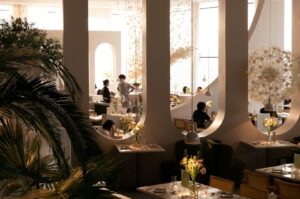
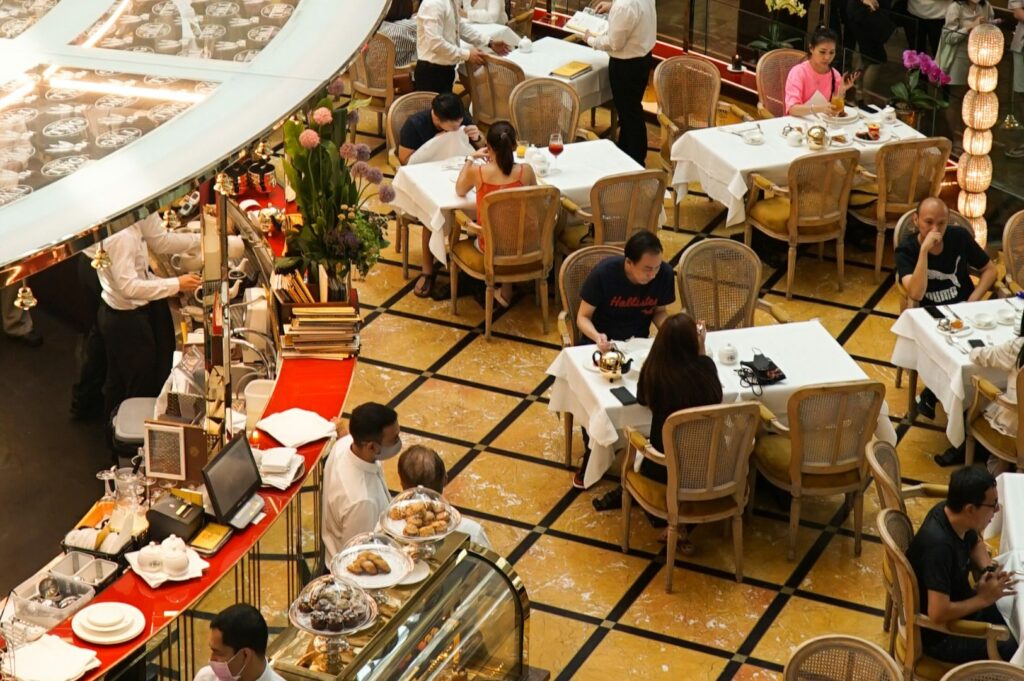
There is a specific kind of silence that falls when you step out of a taxi and into the foyer of a truly exceptional restaurant. It’s not an empty silence, but a hush—a deliberate softening of the world outside. The traffic, the notifications, the endless mental checklist of the week all seem to dissolve at the threshold, replaced by the soft click of heels on marble, the murmur of hushed conversation, and the feeling that, for the next few hours, nothing matters but the person standing beside you.
Valentine’s Day, for all its commercial noise and performative gestures, offers us a rare permission slip. It is an invitation to pause. In our daily lives, we are often rushing past one another—two ships passing in the kitchen, coordinating schedules over morning coffee, trading exhausted smiles before sleep. We love deeply, but we often love in the margins of our busy lives.
This is why a luxurious Valentine’s dining experience holds such profound power. It isn’t about the status of the reservation or the cost of the champagne, though those things have their place. It is about the creation of a sanctuary. When we commit to an evening of fine dining, we are essentially buying time and attention. We are carving out a space where the noise stops so that we can hear each other again.
Why Valentine’s Day Deserves Slowness
Modern life is defined by velocity. We consume content in seconds, eat lunches at our desks in minutes, and optimize our schedules for maximum efficiency. Romance, however, cannot be optimized. It requires inefficiency. It requires lingering.
A truly romantic dining experience is inherently slow. A tasting menu, for example, is an act of rebellion against the clock. It forces you to submit to a rhythm that you do not control. You cannot rush the kitchen; you cannot hurry the sommelier. You must simply sit and wait.
The Psychology of Pausing
Psychologically, this enforced slowness is vital for connection. When we slow down, our nervous systems regulate. The “fight or flight” stress of the workday recedes, and we enter a state of “rest and digest”—both literally and emotionally. It takes time for the brain to switch modes.
A quick dinner at a bustling bistro, while fun, often keeps us in high-beta brainwave states—alert, reactive, quick. A three-hour dinner at a refined establishment invites us into alpha states—relaxed, creative, and receptive. This is where deep conversation lives. It is in the second hour of the meal, when the main course is cleared and the wine is breathing, that the guard truly comes down. We share dreams we haven’t voiced in months; we laugh at old memories; we rediscover the person we fell in love with.
This is why we seek out the luxury dining experience for Valentine’s. We aren’t just hungry for food; we are starving for time that doesn’t feel scarce.
Atmosphere as the First Act of Romance
Long before the amuse-bouche arrives, the room itself begins to work on you. Atmosphere is the invisible hand of romance. In top-tier hospitality, nothing is accidental. The lighting is dimmed to a specific lumen that softens the features, making everyone look just a little more beautiful, a little more rested. The acoustics are engineered so that you can hear the person across from you without shouting, yet you cannot overhear the table next to you.
Texture plays a surprisingly powerful role in how connected we feel. The weight of heavy silverware, the cool touch of fine crystal, the glide of a linen tablecloth—these sensory inputs ground us in the physical moment. They pull us out of our heads (where we worry about tomorrow) and into our bodies (where we experience pleasure).
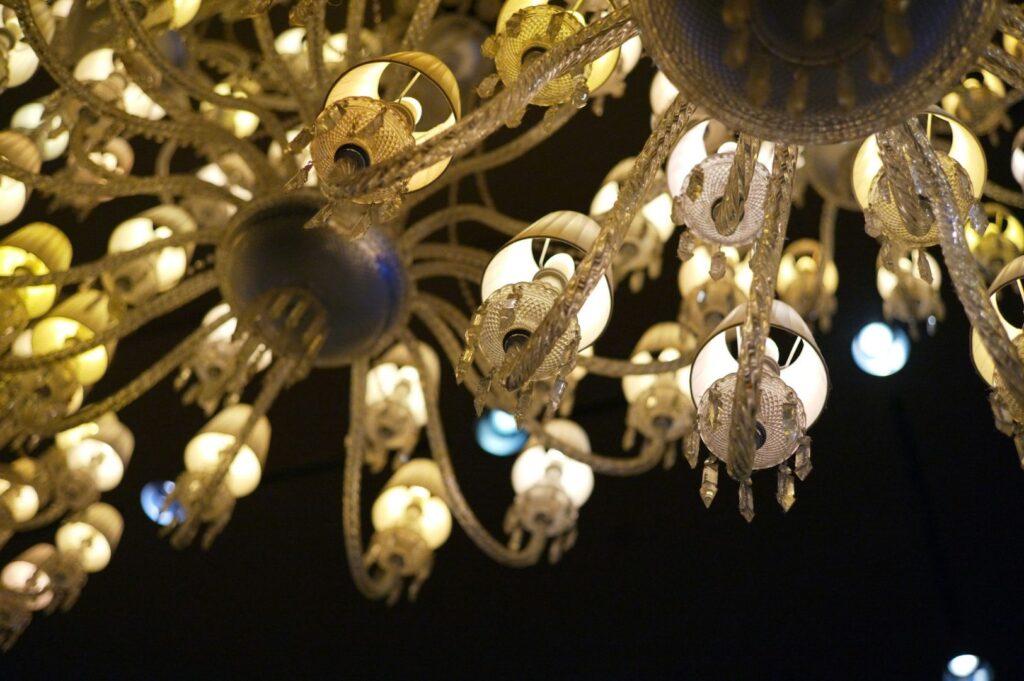
Consider the difference between a harsh, overhead light and the glow of a taper candle. One exposes; the other invites. One feels clinical; the other feels conspiratorial. A luxurious Valentine’s date leverages these atmospheric cues to create a feeling of intimacy that is almost impossible to replicate at home.
- Lighting: Soft, warm, and low, encouraging pupils to dilate—a subconscious biological signal of attraction.
- Sound: A curated playlist or live ambient music that fills the silence without competing for attention.
- Space: Generous spacing between tables ensures that your conversation remains a private exchange, not a public performance.
When the atmosphere is right, you feel held by the room. You don’t have to work to create a romantic mood; the space does the heavy lifting for you.
Atmosphere as the First Act of Romance
We often think of food as fuel, or perhaps entertainment. But in the context of a relationship, food is a vehicle for memory. There is a reason we celebrate anniversaries and milestones with feasts. The act of breaking bread together is primal, but the act of discovering new flavors together is bonding.
Novelty is essential for long-term romantic health. Relationship psychologists often cite the importance of “self-expansion”—the idea that couples feel closer when they engage in new and exciting activities together. A tasting menu is a micro-adventure. You are navigating a landscape of flavors you may never have encountered before.
- “Have you ever tasted sea urchin like this?”
- “I didn’t think I liked beetroot, but this is incredible.”
- “Remember that wine we had in Italy? This reminds me of it.”
These small exchanges build a shared narrative. You are building a library of sensory memories that belong only to the two of you. Years from now, the taste of a specific vintage or the scent of truffles might transport you back to this specific night, anchoring the memory of your love in a tangible sensation.
Furthermore, a luxury meal often challenges us. It presents us with artistry and creativity that sparks intellectual conversation. Instead of talking about the kids’ schedules or the leak in the roof, you are discussing art, culture, and preference. You are engaging with each other’s minds, not just your household roles.
The Quiet Power of Intention
Ultimately, the most luxurious element of a Valentine’s dinner is intention. Booking the table weeks in advance, dressing up in clothes that make you feel confident, arranging childcare, turning off the phone—these are all acts of intention. They signal that the relationship is a priority.
We live in a culture that often prioritizes the casual. We text instead of call; we “hang out” instead of date. There is a time and place for comfort, but there is also a profound need for ceremony. Rituals elevate the mundane into the meaningful. Treating Valentine’s Day not as a hallmark obligation, but as a deliberate ritual of reconnection, changes the energy of the entire evening.
When you sit across from your partner in a room filled with beauty, eating food prepared with passion, you are affirming the foundation of your life together. You are saying, “I see you. I appreciate you. And I want to be here, nowhere else, with you.”
A Final Thought on Celebrating Love
As you consider how to mark this Valentine’s Day, I encourage you to look beyond the grand gestures of jewelry or giant bouquets. Those things are lovely, but they sit on a shelf. An experience sits in the soul.
Choose an evening that offers you the luxury of time. Find a place where the lighting is kind, the wine is complex, and the service is invisible. Give yourselves the gift of a few hours where the world stops spinning, allowing you to remember exactly why you chose each other in the first place.
Whether it is your first Valentine’s together or your thirtieth, the quiet power of a shared, luxurious meal remains one of the most honest ways to say “I love you.” It is a promise that, no matter how busy life gets, there will always be a seat at the table for just the two of you.
If you are ready to curate an unforgettable evening of connection, we invite you to explore our selection of the city’s most refined dining experiences, designed to turn a simple dinner into a lasting memory or click here to visit Luxury Dining to learn more .