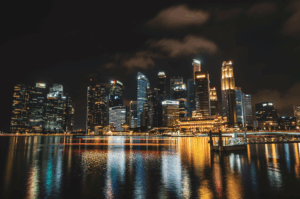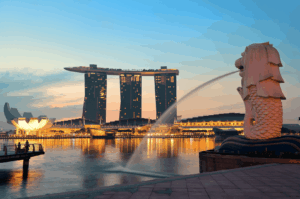
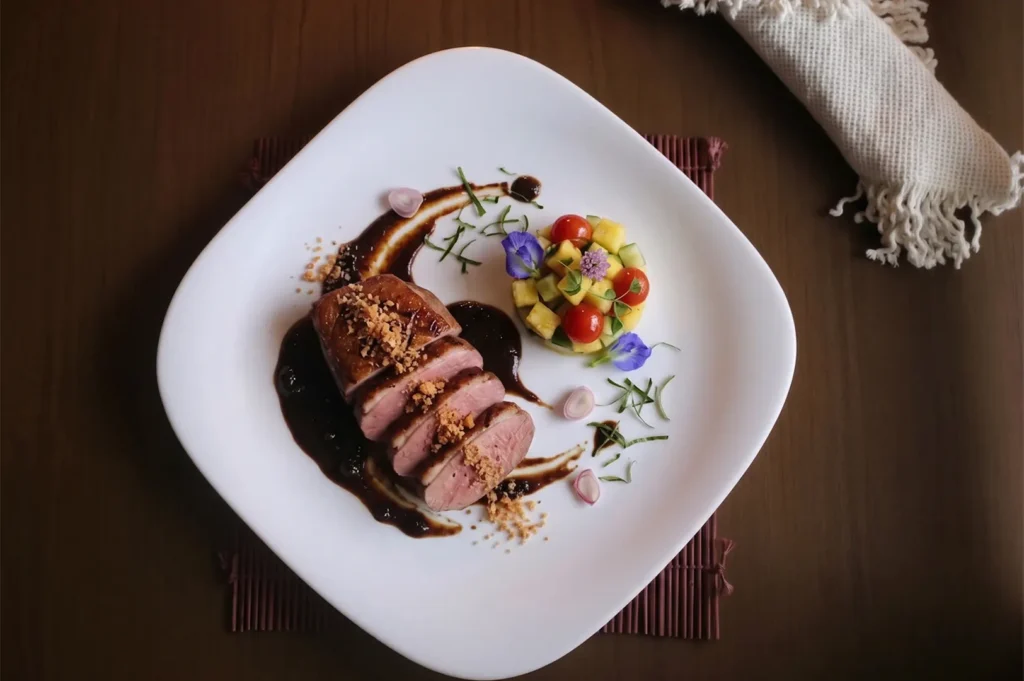
Singapore occupies a distinctive position within the global dining landscape because its culinary culture was built through intersection rather than singular tradition. Unlike cities defined by one dominant cuisine, Singapore developed through the coexistence of Chinese, Malay, Indian, Peranakan, and international influences. This foundation has allowed cultural fusion dining to evolve organically rather than artificially within the country’s restaurant scene.
In many markets, fusion cuisine often struggles with coherence. Restaurants combine influences primarily for novelty, resulting in concepts that feel disconnected from cultural context. Singapore differs because culinary integration already exists within everyday dining culture. Local dishes themselves frequently represent layers of migration, adaptation, and shared influence accumulated over generations. As a result, contemporary chefs operate within an environment where cross-cultural interpretation feels natural rather than forced.
This cultural fluidity has contributed significantly to Singapore’s fine dining sector. Many of the city’s most respected restaurants incorporate Japanese techniques, French structure, Southeast Asian ingredients, and regional heritage simultaneously without compromising clarity. The strongest examples of fusion dining do not rely on excess experimentation. Instead, they demonstrate careful balance between technical discipline and cultural understanding.
Singapore’s international positioning further strengthens this ecosystem. As a global business and hospitality hub, the city attracts chefs, restaurateurs, and diners from diverse backgrounds. This exposure creates a dining audience that is highly receptive to hybrid culinary ideas while remaining discerning about authenticity and execution. Restaurants are therefore encouraged to innovate responsibly rather than pursue fusion for visual impact alone.
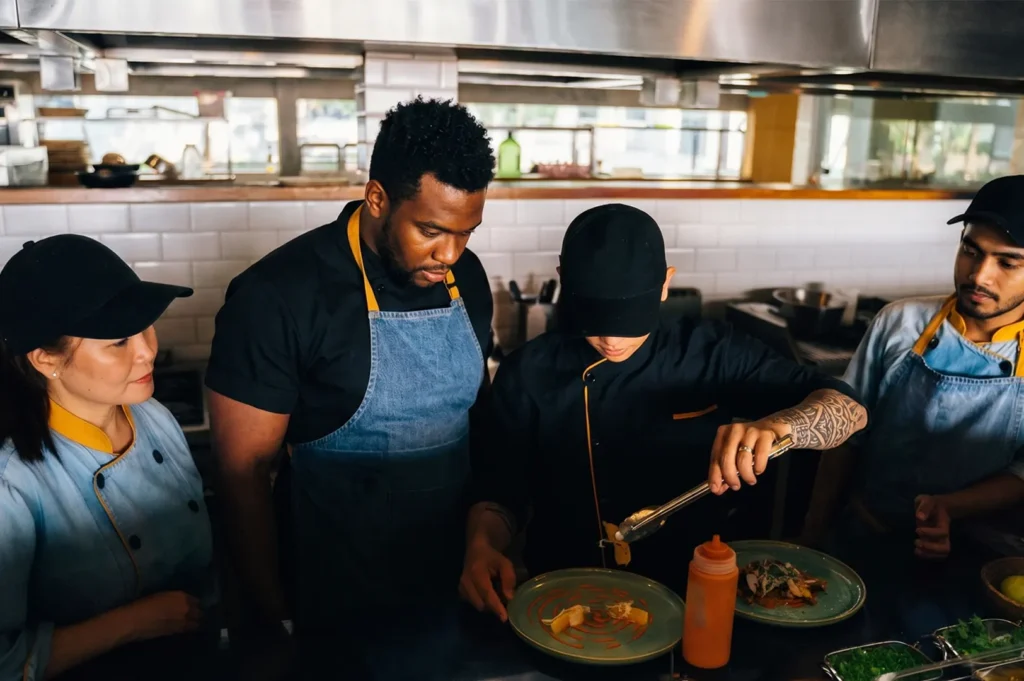
Another factor behind Singapore’s success in cultural fusion dining is the city’s emphasis on adaptability. Local dining culture has historically embraced reinterpretation and evolution. Traditional flavours are frequently adapted across formats, from hawker cuisine to luxury tasting menus. This flexibility allows chefs to explore modern approaches while maintaining recognizable references that remain accessible to diners.
Importantly, Singapore’s most successful fusion restaurants rarely position cultural blending as their sole identity. Instead, fusion functions as a framework for refinement and perspective. Restaurants increasingly focus on cohesion, ensuring that ingredients, techniques, and narratives support a singular dining philosophy rather than competing for attention.
This measured approach reflects the maturity of Singapore’s restaurant industry. The city no longer treats cultural fusion as a trend-driven concept. It has become an established part of the culinary landscape, supported by diners who value nuance, precision, and contextual understanding. Fusion dining in Singapore succeeds because it reflects the country’s broader social and cultural structure rather than existing outside it.
Ultimately, Singapore excels at cultural fusion dining because integration is embedded within the city’s identity itself. Its restaurants operate within a culinary environment shaped by coexistence, adaptation, and continual exchange. The result is a dining culture capable of innovation without losing coherence or cultural respect.
“Culinary identity becomes strongest when cultures interact with clarity rather than competition.”
For more editorial perspectives and curated insights into Singapore’s restaurant landscape, visit Luxury Dining SG.